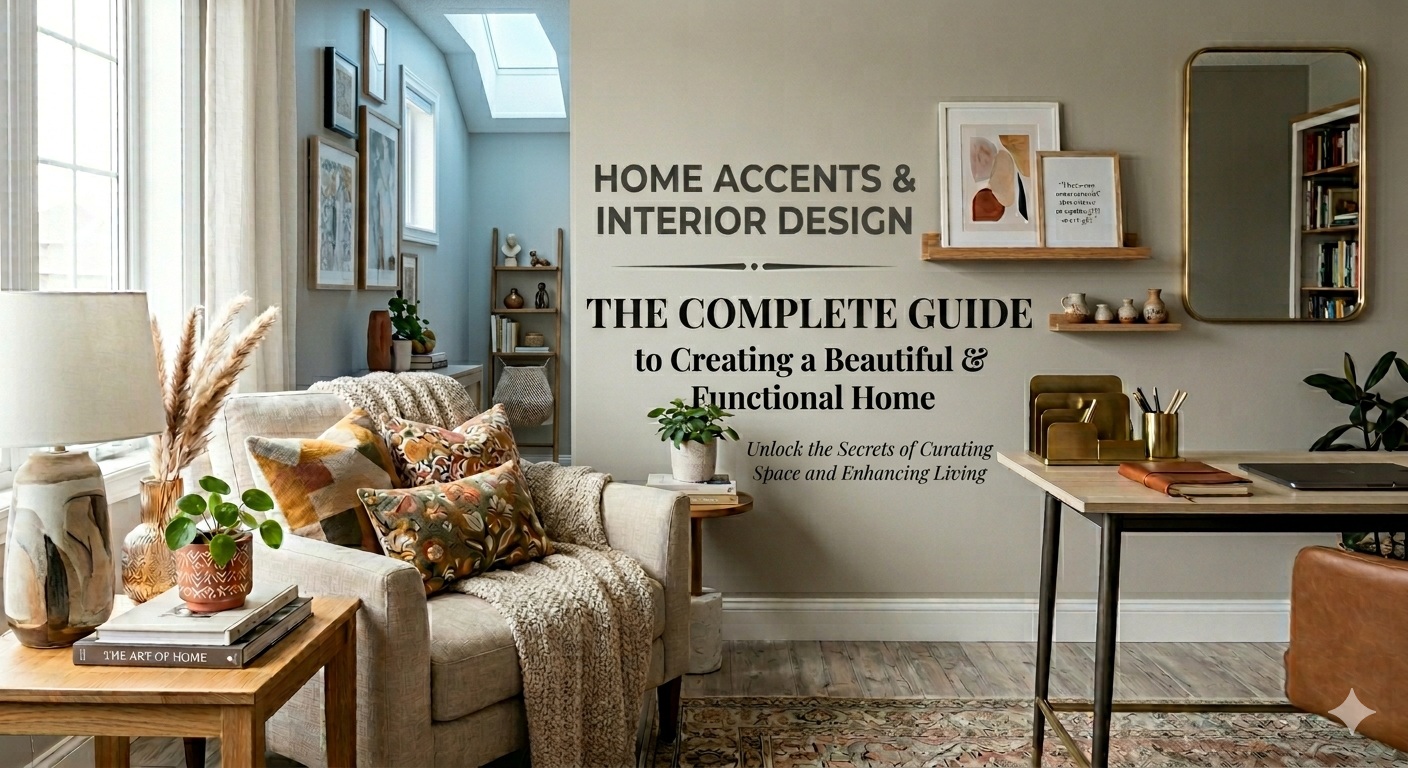
A well-designed home is more than just a place to live—it is a reflection of your personality, lifestyle, and taste. While furniture and architectural elements provide the foundation of a room, home accents and interior design details are what truly bring a space to life.
From decorative pillows and wall art to lighting, textures, and color palettes, every element contributes to the overall atmosphere of a home. Whether you’re decorating a new house, renovating a room, or simply refreshing your living space, understanding the principles of home accents and interior design can help you create a stylish, comfortable, and cohesive environment.
In this comprehensive guide, we’ll explore everything you need to know about home accents, interior design principles, popular styles, current trends, and practical tips for transforming your home.
What Are Home Accents?
Home accents are decorative elements that enhance the appearance, personality, and functionality of a space. They are the finishing touches that complete a room’s design.
Common home accents include:
- Throw pillows
- Rugs and carpets
- Curtains and drapes
- Wall art and framed prints
- Mirrors
- Decorative trays
- Candles
- Vases
- Indoor plants
- Decorative books
- Sculptures and figurines
- Lighting fixtures
Unlike major furniture pieces, home accents can be easily changed or updated, making them one of the most affordable ways to refresh a home’s appearance.
Understanding Interior Design
Interior design is the art and science of enhancing interior spaces to achieve a healthier, more functional, and aesthetically pleasing environment.
A successful interior design combines:
- Functionality
- Comfort
- Visual appeal
- Space planning
- Color coordination
- Lighting
- Texture
- Balance
The goal is to create spaces that not only look beautiful but also support the needs and lifestyle of the people who live there.
The Core Principles of Interior Design
1. Balance
Balance refers to the visual weight of objects within a room.
There are three types of balance:
| Symmetrical Balance | Asymmetrical Balance | Radial Balance |
| Often used in traditional interiors. Examples: Matching sofas Identical bedside tables Paired lamps This creates a formal and orderly appearance. | Uses different objects with similar visual weight. Examples: A large floor lamp balanced by several smaller decorative pieces This creates a more modern and relaxed look | Elements are arranged around a central focal point. Examples: Dining tables with chairs arranged around them Circular chandeliers |
2. Harmony
Harmony ensures all design elements work together.
A harmonious room features:
- Consistent color schemes
- Coordinated furniture
- Complementary textures
- Repeated design motifs
3. Contrast
Contrast creates visual interest.
Examples include:
- Light walls with dark furniture
- Smooth surfaces paired with rough textures
- Modern pieces mixed with vintage accents
Without contrast, rooms can feel flat and uninspiring.
4. Rhythm
Rhythm creates movement throughout a room.
It can be achieved through:
- Repeating colors
- Similar patterns
- Consistent shapes
- Coordinated materials
This encourages the eye to move naturally throughout the space.
5. Emphasis
Every room should have a focal point.
Examples:
- Fireplace
- Statement chandelier
- Accent wall
- Large artwork
- Scenic window view
The focal point naturally draws attention and anchors the room.
The Importance of Color in Interior Design
Color has a significant impact on mood and perception.
| Warm Colors | Cool Colors | Neutral Colors |
| Examples: Red, Orange, Yellow Effects: Energetic, Welcoming, Stimulating Ideal for: Dining rooms, Kitchens, Social spaces | Examples: Blue, Green, Purple Effects: Relaxing, Calming, Peaceful Ideal for: Bedrooms, Bathrooms, Home offices | Examples: White, Beige, Gray, Taupe Effects: Timeless, Versatile, Elegant Ideal for creating a foundation that allows accents to stand out. |
Popular Interior Design Styles
Modern
Characteristics:
- Clean lines
- Minimal clutter
- Neutral palettes
- Functional furniture
Modern interiors focus on simplicity and sophistication.
Contemporary
Often confused with modern design.
Features:
- Current trends
- Open spaces
- Sleek furnishings
- Bold accents
Contemporary design evolves with changing tastes.
Scandinavian
Inspired by Nordic living.
Features:
- Light colors
- Natural wood
- Cozy textiles
- Minimalist décor
This style prioritizes comfort and simplicity.
Industrial
Inspired by warehouses and urban lofts.
Features:
- Exposed brick
- Metal fixtures
- Concrete surfaces
- Open layouts
Industrial interiors combine raw materials with modern functionality.
Traditional
Features:
- Rich wood tones
- Elegant furniture
- Symmetry
- Classic décor
Traditional interiors create a timeless and sophisticated atmosphere.
Farmhouse
A popular style that combines comfort and rustic charm.
Features:
- Reclaimed wood
- Neutral colors
- Cozy textures
- Vintage accents
Modern farmhouses remain one of today’s most sought-after design styles.
Bohemian
A free-spirited design style.
Features:
- Layered textiles
- Eclectic décor
- Vibrant colors
- Global influences
Perfect for creative homeowners who enjoy personal expression.
How Home Accents Transform a Space
Decorative Pillows
Throw pillows instantly add:
- Color
- Texture
- Comfort
Mixing sizes and patterns creates visual interest.
Area Rugs
Rugs define spaces and add warmth.
Benefits include:
- Noise reduction
- Comfort underfoot
- Improved room cohesion
Wall Art
Artwork expresses personality and enhances visual appeal.
Popular options:
- Canvas prints
- Framed photographs
- Abstract art
- Gallery walls
Mirrors
Mirrors make rooms appear:
- Larger
- Brighter
- More open
They are especially useful in smaller spaces.
Indoor Plants
Plants bring nature indoors.
Benefits include:
- Improved aesthetics
- Better air quality
- Increased sense of well-being
Popular choices:
- Snake Plant
- Monstera
- Pothos
- Peace Lily
- Fiddle Leaf Fig
Lighting
Lighting is often the most overlooked design element.
A balanced lighting plan includes:
Ambient Lighting
General illumination.
Examples:
- Ceiling fixtures
- Recessed lighting
Task Lighting
Focused lighting.
Examples:
- Desk lamps
- Reading lights
Accent Lighting
Decorative illumination.
Examples:
- Wall sconces
- LED strips
- Picture lights
Interior Design Trends for 2026
Sustainable Design
Eco-friendly materials continue to gain popularity.
Examples:
- Reclaimed wood
- Bamboo
- Recycled materials
- Energy-efficient lighting
Natural Materials
Designers are embracing:
- Stone
- Wood
- Linen
- Rattan
- Woven textures
These materials create warmth and authenticity.
Multifunctional Spaces
As remote work remains common, homes are becoming more versatile.
Examples:
- Home office corners
- Convertible furniture
- Flexible layouts
Biophilic Design
This trend focuses on connecting interiors with nature.
Features include:
- Indoor plants
- Natural light
- Organic materials
- Nature-inspired colors
Curved Furniture
Rounded shapes continue to dominate modern interiors.
Examples:
- Curved sofas
- Rounded coffee tables
- Arch mirrors
These elements create softer and more inviting spaces.
Room-by-Room Design Tips
Living Room
Focus on:
- Comfortable seating
- Layered lighting
- Statement artwork
- Area rugs
- Decorative accessories
Create a balance between comfort and style.
Bedroom
Prioritize:
- Comfortable bedding
- Soft lighting
- Relaxing colors
- Minimal clutter
The bedroom should feel like a peaceful retreat.
Kitchen
Add personality through:
- Decorative lighting
- Open shelving
- Stylish bar stools
- Statement backsplashes
Functionality should remain the top priority.
Bathroom
Enhance comfort with:
- Elegant mirrors
- Soft towels
- Decorative trays
- Greenery
Even small bathrooms can feel luxurious with thoughtful accents.
Common Interior Design Mistakes to Avoid
Buying Everything at Once
Great interiors evolve over time.
Take time to discover what works best in your space.
Ignoring Scale and Proportion
Furniture and décor should fit the room appropriately.
Oversized or undersized pieces can disrupt balance.
Poor Lighting
Relying solely on ceiling lights often creates a flat atmosphere.
Layer different types of lighting for better results.
Following Every Trend
Trends come and go.
Invest in timeless foundations and use accents for trendy updates.
Overdecorating
Too many accessories can create visual clutter.
Remember: Sometimes less is more.
Budget-Friendly Ways to Upgrade Your Home
You don’t need a massive budget to improve your home’s appearance.
Affordable upgrades include:
- Repainting walls
- Adding throw pillows
- Updating curtains
- Incorporating plants
- Replacing outdated lighting
- Creating gallery walls
- Rearranging furniture
- Adding decorative mirrors
Small changes can have a surprisingly large impact.
Final Thoughts
Home accents and interior design work together to create spaces that are beautiful, functional, and uniquely yours. While furniture forms the foundation of a room, accents add character, warmth, and personality.
Whether you prefer modern minimalism, cozy farmhouse charm, Scandinavian simplicity, or eclectic bohemian style, the key to successful interior design is balance, comfort, and authenticity.
Start with the basics, choose quality pieces that reflect your personality, and use home accents strategically to bring your vision to life. Over time, your home will become more than just a place to live—it will become a space that truly feels like home.
Frequently Asked Questions
What are home accents?
Home accents are decorative accessories such as pillows, rugs, artwork, mirrors, plants, and lighting that enhance a room’s appearance and personality.
How do I choose the right interior design style?
Consider your lifestyle, preferences, and existing architecture. Gather inspiration from magazines, websites, and social media before committing to a style.
What colors make a room look bigger?
Light colors such as white, cream, soft gray, and pale beige can make rooms feel larger and brighter.
How often should I update home accents?
Many homeowners refresh accents seasonally or every few years to keep interiors feeling fresh without major renovations.
What is the most important element of interior design?
Functionality is often considered the most important element. A beautiful room should also be comfortable and practical for daily living.
Are indoor plants important in interior design?
Yes. Indoor plants improve aesthetics, add natural texture, and help create a healthier and more relaxing indoor environment.
Related Articles:
– 15 Simple Upgrades to Enhance Your Master Bedroom
– 12 Benefits of Having Plants in Your House
– Take Your Cabinetry to the Next Level
– A Comprehensive Guide to Maintaining a Clean and Healthy Home Environment
– Modern Crystal Glass Trends for Decor