Most Prague itineraries are written for adults with good shoes and endless patience. Neither describes a seven-year-old on day two of jet lag.
The good news is that Prague is small. The old center, the castle and the river all sit within a couple of kilometers of each other, and there are more playgrounds tucked between the churches than you’d expect. The trick is to do less than you think you should. One big thing in the morning, something easy after lunch, back at the hotel before anyone falls apart.
Before you fly
If you’re traveling on a Philippine passport, you’ll need a Schengen visa. When the Czech Republic is your main stop, you apply through the Czech embassy in Manila. Appointments get scarce before Christmas and the summer holidays, so don’t leave it to the last month. Americans can still come for up to 90 days without a visa, but the EU is introducing a new online authorization called ETIAS. Check the official EU website before booking, because the start date has already moved more than once.
Prague is seven hours behind Manila in winter and six in summer. Whatever you planned for the first afternoon, cut it in half. A walk, an early dinner, some daylight. That’s enough.
A few small things that make life easier:
- Tap water is safe to drink, so bring refillable bottles.
- Public toilets usually cost 10 to 20 crowns. Keep coins handy, especially if you have a child who’s just been potty trained.
- Cards are accepted almost everywhere, even for a single coffee.
- Children under 15 ride trams and the metro for free. Older kids should carry a passport in case a ticket inspector asks.
- Paper tickets have to be stamped in the yellow machine when you board. Inspectors don’t accept “we didn’t know.”
Leave the big stroller at home if you can. The Old Town is cobblestones from end to end and the castle sits on top of a properly steep hill. A compact stroller is fine for parks and trams, but in the center a carrier will save your arms.
Where to stay
It’s tempting to book right next to Old Town Square. With kids, I wouldn’t. Rooms there tend to be small, the streets stay loud until late and you’ll be dragging suitcases over cobblestones from the taxi.
Many families end up happier a bit further out, where rooms are bigger and evenings are quiet. On the west side of the city there are family rooms in a quieter part of Prague with interconnecting rooms for up to six, a baby cot and a playground with a trampoline and mini golf right next to the restaurant. The tram gets you to the center in 15 to 20 minutes. After a full day of sightseeing, letting the kids run around outside while you finish dinner is worth more than a view of a church tower.
Day 1: Old Town and the river
Get to Old Town Square early, ideally before ten. The Astronomical Clock puts on its show every hour: two little windows open, the apostles shuffle past and a skeleton rings a bell. That’s about it. Plenty of adults find it underwhelming, and it regularly shows up on lists of Europe’s most overrated sights. Kids usually love it. Watch their faces, not the clock.
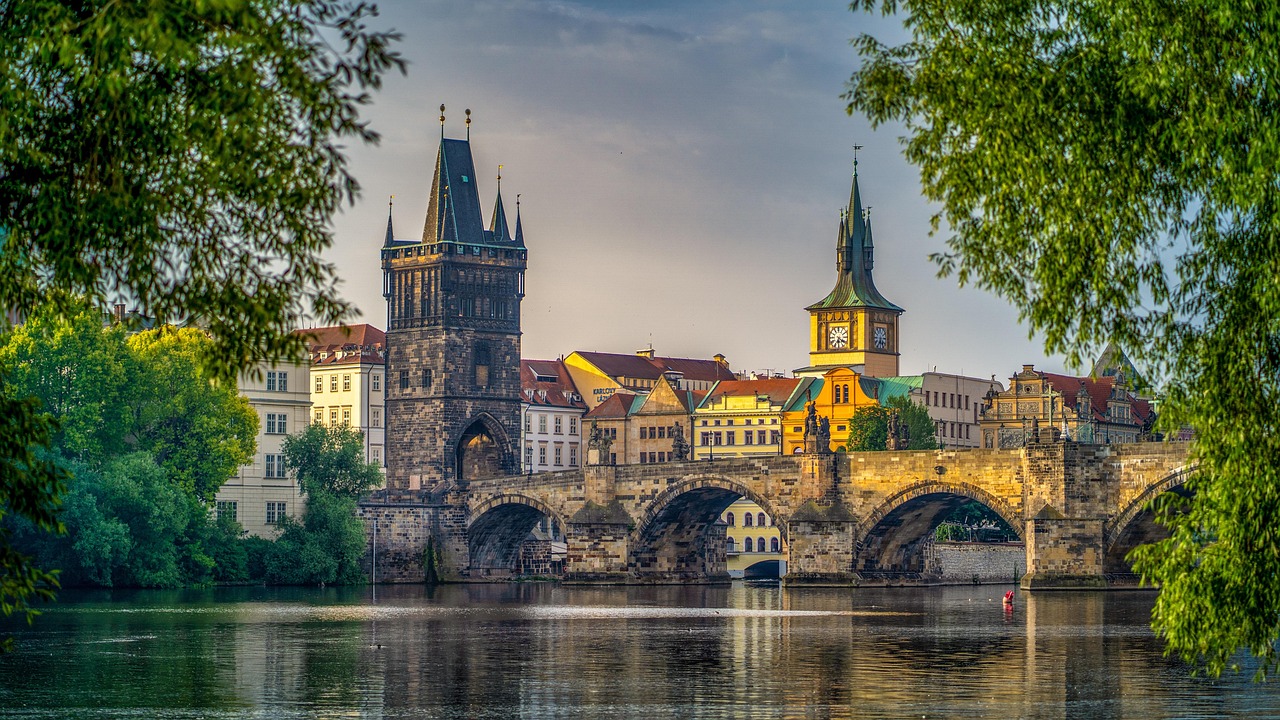
Charles Bridge is a ten-minute walk away. Go now rather than later. By noon it’s packed with tour groups and street painters, and holding onto a small hand in that crowd is no fun.
Once you’re across, head into Kampa Park. It has grass, big old trees and a playground, and it’s a good place to sit while someone naps.
For lunch, fried cheese with fries (smažený sýr) is the Czech dish most kids accept without negotiation. Schnitzel works too. For dessert, try palačinky, thin pancakes with jam or chocolate.
You’ll smell trdelník all over the center, a sugar-coated pastry rolled on a spit. It’s sold as an old Czech tradition. It isn’t, and locals will happily tell you it showed up for tourists not that long ago. Buy one anyway.
If it’s warm, rent a paddle boat on Slavic Island next to the National Theatre in the afternoon. Twenty minutes on the river with the castle in the background will probably be what the kids talk about at dinner. If anyone still has energy, Children’s Island, just across the river, has a big free playground.
Day 2: The castle and Petřín Hill
Take tram 22 up to the Pražský hrad stop. People will tell you the walk up through the Lesser Town is beautiful, and it is. It’s also steep enough to wear out a four-year-old before you even reach the gate.
Don’t try to see the whole castle. It’s enormous, and most of it means nothing to a child. Three things are worth the effort. The changing of the guard happens every hour, and the noon one comes with a small band. St. Vitus Cathedral, where the stained glass throws colored light across the floor on a sunny morning. And Golden Lane, a row of tiny houses built into the castle wall, some so low that adults have to duck. You’ll need a castle ticket for that one.
Afterwards, walk down through the gardens toward Petřín Hill. At the top there’s a lookout tower that looks like a mini Eiffel Tower, and next to it a mirror maze that hasn’t changed much since the 1890s. It’s a bit silly, and kids adore it. Ride the funicular back down. It takes a regular public transport ticket.
Day 3: Prague Zoo
Give the zoo the whole morning, longer if you have toddlers who stop for every duck. It’s in Troja, north of the center, about half an hour by metro and bus, and it consistently ranks among the best zoos in Europe.
The gorillas and the elephant valley are the big draws. On a cold or rainy day, head for the Indonesian Jungle pavilion, which is warm and humid enough that you’ll want to take your jacket off. There’s also a chairlift between the lower and upper parts of the zoo. Kids treat it as a ride, not a way to get around.
The Botanical Garden is right next door, and its tropical greenhouse is a nice quiet hour after the zoo. If it’s pouring, skip both and go to the National Technical Museum instead: one huge hall full of steam engines, old cars and airplanes hanging from the ceiling.
When to go, and what to add
May, June and September are the easiest months. Warm but not hot, and the crowds are manageable. December brings Christmas markets to the main squares, which kids love, just pack seriously warm clothes. July and August work too, but the midday heat on stone squares wears small children out quickly.
If you’re flying all the way from Asia or the US, it makes sense to add another city. Vienna is about four hours away by direct train, and the trains have enough room for kids to stretch their legs. The trip-planning guide here on the blog can help you piece together a longer route.
You won’t see everything in three days, and that’s fine. Kids will remember the swans and the paddle boats long after they’ve forgotten which church was which.
Related Articles:
– 25 Best Travel Blogs: Top Travel Blogger Websites in the World
– How to Make a Good Travel Vlog
– The Future of Luxury Travel: A Glimpse of What’s To Come
– The 8 Elements of Travel
– Everything You Need to Know About Travelling
