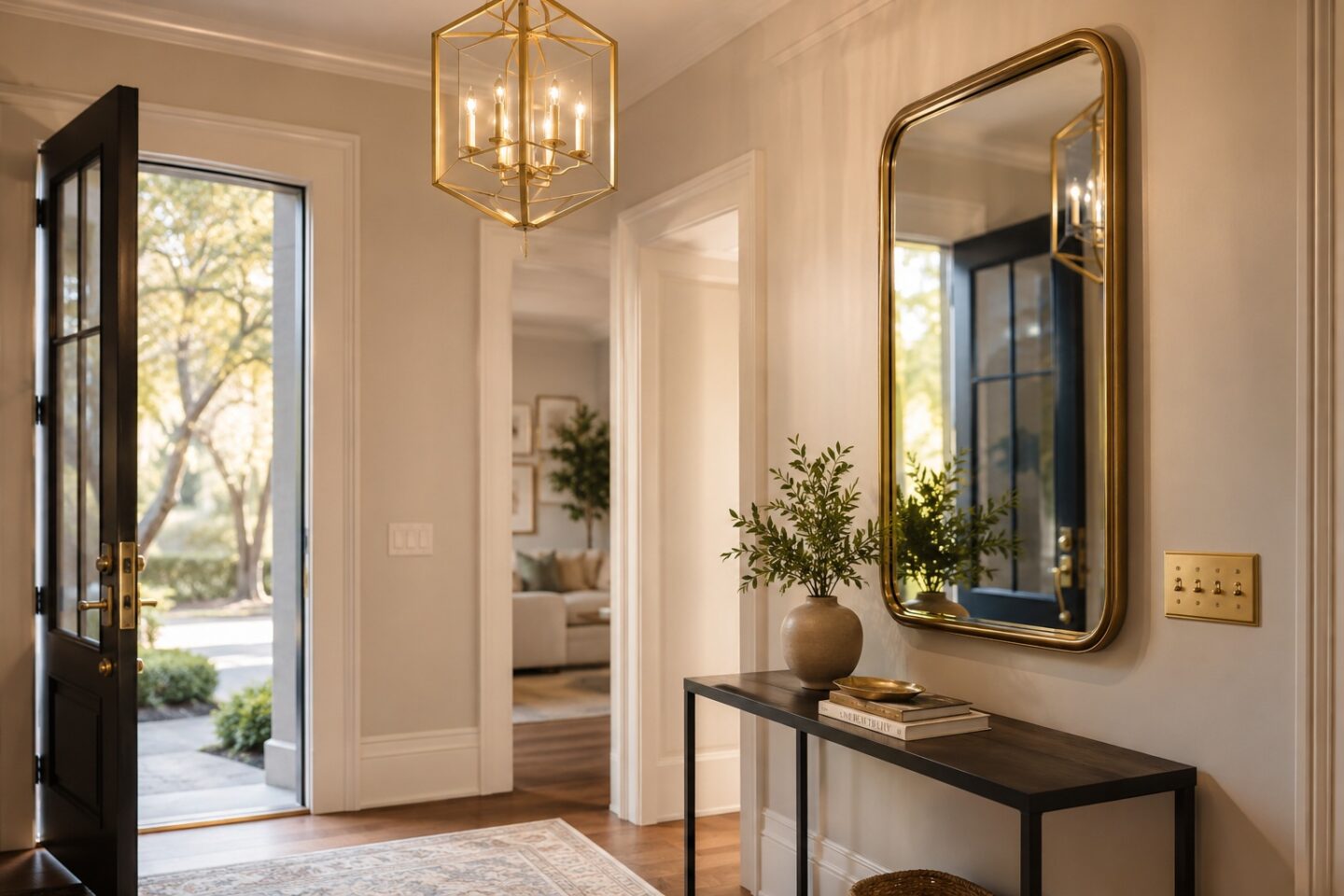
We used to think luxury meant a full renovation or spending thousands on designer furniture. Then we visited a friend’s modest apartment last year, and something felt different the moment we walked in. It wasn’t bigger or newer than ours. But every detail felt intentional. The kind of place where you immediately relax and think, “I want my home to feel like this.”
That visit changed how we thought about upgrades. We stopped chasing big transformations and started paying attention to the small details that actually make a space feel premium. One of the first changes we made was swapping out our tired bathroom hardware for sleek gold bathroom faucets that instantly elevated the entire room without touching the tiles or layout. It was the kind of update that made us wonder why we’d waited so long. Turns out, luxury isn’t about the size of the change. It’s about choosing the right ones. Here are five small upgrades that completely transformed how our home feels, and honestly, we wish we’d done them years earlier.
1. UPGRADE YOUR ENTRYWAY LIGHTING
Your entryway sets the tone for everything that follows. We’d always focused on living rooms and bedrooms, but we never thought about the first space guests actually see. Then we realized our builder-grade overhead fixture was doing absolutely nothing for the space.
Swapping it for quality entryway foyer lighting with a bit of character changed the entire vibe. Suddenly, walking through the front door felt like an experience instead of just a transition. The right fixture draws eyes up, adds warmth, and signals that thought went into every corner of the home. We went with a piece that had presence without overwhelming the space, something that balanced scale with style.
According to the National Association of Realtors, first impressions of a home are formed within the first 7 to 10 seconds. That’s barely enough time to get through the door. Lighting plays a massive role in that snap judgment, creating mood and setting expectations before anyone sees the rest of the house.
The difference wasn’t just visual. Coming home at night felt better. That small change turned a forgettable space into one we actually notice and appreciate every single day.
2. REPLACE STANDARD HARDWARE WITH SOMETHING THAT FEELS SUBSTANTIAL
Cabinet pulls, drawer handles, door knobs. We’d never given them much thought. They were just there. But cheap hardware feels cheap every time you touch it. And you touch it constantly.
We replaced every piece of flimsy hardware in the kitchen and bathroom with solid, weighty alternatives. Not custom or wildly expensive, just well-made. The tactile difference is immediate. Drawers close smoothly. Handles feel sturdy. It’s one of those changes you don’t see in photos, but you feel it in real life.
This is the same principle we noticed when we stayed at luxury accommodations that felt like home. Every small interaction, from opening a door to adjusting a drawer, felt smooth and intentional. That’s not an accident. It’s attention to detail. And you can bring that same feeling into your own space without a massive investment.
3. ADD DIMMER SWITCHES EVERYWHERE
We avoided this upgrade for way too long because it sounded complicated. It’s not. And the impact is huge.
Dimmer switches give you control over mood in every room. Bright light for cleaning and cooking. Soft light for evenings and relaxation. The ability to adjust makes every space more versatile and comfortable. It’s one of those upgrades where you immediately wonder how you lived without it.
A 2024 study from the U.S. Department of Energy found that dimming lights by just 25% can cut energy use by approximately 20%, extending bulb life and reducing utility costs. But the real value isn’t just savings. It’s the way it changes how a space feels throughout the day.
We installed them in the living room, bedrooms, dining area, and even hallways. Now every room has a range instead of just on or off. It’s a subtle shift that makes the whole house feel more considered and adaptable to whatever’s happening.
4. INVEST IN ONE QUALITY MIRROR
Mirrors do more than show your reflection. They bounce light, create depth, and make spaces feel larger and brighter. But a cheap mirror with a flimsy frame does the opposite. It makes everything look unfinished.
We replaced a basic bathroom mirror with one that had a real frame, substantial weight, and clean lines. The bathroom instantly felt more expensive. Same tile. Same paint. Different mirrors. The whole room elevated.
Mirrors are one of the easiest ways to add perceived luxury because they work on multiple levels. Functionally, they improve lighting and openness. Visually, a well-chosen frame becomes a focal point. You don’t need a dozen mirrors throughout the house. One great mirror in the right spot does more than five mediocre ones scattered around.
5. UPGRADE YOUR SWITCH PLATES AND OUTLET COVERS
This sounds almost too small to matter. It’s not.
Standard plastic switch plates and outlet covers are everywhere, and they’re ugly. We never noticed them until we saw a home that had replaced them all with clean metal versions. Suddenly, every wall in our house looked cheaper by comparison.
Swapping them out takes minutes per room. The cost is minimal. But the cumulative effect across the whole house is surprisingly significant. The walls look cleaner. Details look finished. It’s one of those micro upgrades that doesn’t demand attention but quietly improves everything.
People won’t consciously notice your switch plates. But they will feel the overall impression of a space that’s been thoughtfully completed down to the smallest details. That’s what luxury actually is. Not loud. Just completeness.
WHY THESE CHANGES WORK
Small upgrades succeed when they improve something you interact with daily or something guests notice immediately. The entryway. The bathroom. The way lights adjust. The feel of a handle. These aren’t decorative choices. They’re functional improvements that also happen to look better.
The other advantage is that small changes are reversible and low risk. If you hate a new faucet, you can replace it. If a dimmer doesn’t work how you expected, you’re not stuck with a massive remodel. You can test, adjust, and refine without commitment or financial stress.
We’ve learned that upgrading a home isn’t about doing everything at once. It’s about identifying the details that matter most to how you actually live in space, and making those better one at a time. The result feels intentional, personal, and yes, a little bit luxurious, without needing to gut a single room.
FAQ
WHAT’S THE BEST ORDER TO TACKLE THESE UPGRADES?
Start with the entryway and bathroom. These spaces create first impressions and get used constantly, so improvements here deliver immediate and ongoing value. Save hardware and switch plates for later since they’re quick wins you can knock out in a weekend once you’ve handled the bigger focal points.
DO GOLD FIXTURES WORK IN EVERY HOME STYLE?
Gold works in more contexts than people expect. Brushed or matte gold fits modern and transitional spaces. Polished gold leans traditional. The key is consistency. If you’re adding gold faucets, consider carrying that finish into cabinet hardware or light fixtures so it feels like a deliberate choice rather than a random accent.
HOW MUCH SHOULD I EXPECT TO SPEND ON THESE FIVE CHANGES?
Budget varies by quality and room size, but expect roughly $150 to $400 for entryway lighting, $100 to $300 for bathroom faucets, $50 to $150 for dimmer switches (depending on how many rooms), $80 to $250 for a quality mirror, and $30 to $100 for switch plates and outlet covers across the house. Total range is around $400 to $1,200, far less than any major renovation but with outsized impact on how the space feels.
CAN RENTERS MAKE ANY OF THESE UPGRADES?
Renters can definitely upgrade mirrors (removable, take them when you move) and possibly dimmer switches if the landlord approves, since they’re beneficial and reversible. Switch plates and hardware are trickier since you’d need to restore originals when moving out. Focus on lighting upgrades like lamps and portable fixtures that don’t require permanent installation but still improve the space significantly.
Related Articles:
– 15 Simple Upgrades to Enhance Your Master Bedroom
– 12 Benefits of Having Plants in Your House
– Take Your Cabinetry to the Next Level
– A Comprehensive Guide to Maintaining a Clean and Healthy Home Environment
– Modern Crystal Glass Trends for Decor
– Home Accents and Interior Design: The Complete Guide to Creating a Beautiful and Functional Home